In my previous article, I looked at the steps a brand-extension strategy should follow to succeed. They were, in order: (1) assessing the state of the brand’s intangible assets and its capacity to extend, (2) uncovering opportunities in the competition and in consumers, (3) deciding on the brand-extension model, and (4) adapting it to the business strategy. Here, we’ll examine the areas into which a brand can extend, and how to identify them based on brand strategy.
Every brand’s intangible assets and the brand core[1] it has established in the consumer’s mind are different. That is why brands’ capacity and areas for extension differ from one another. This holds true even for different brands in the same category—brands that may even belong to the same company.
Your brand can be positioned on essentially four cores, and the core that carries your brand strategy determines the best way to extend: what you do, how you do it, who you are, and your brand purpose. Keeping your brand core in mind, you have eight distinct paths to extend.
1. Diversify the product’s content:
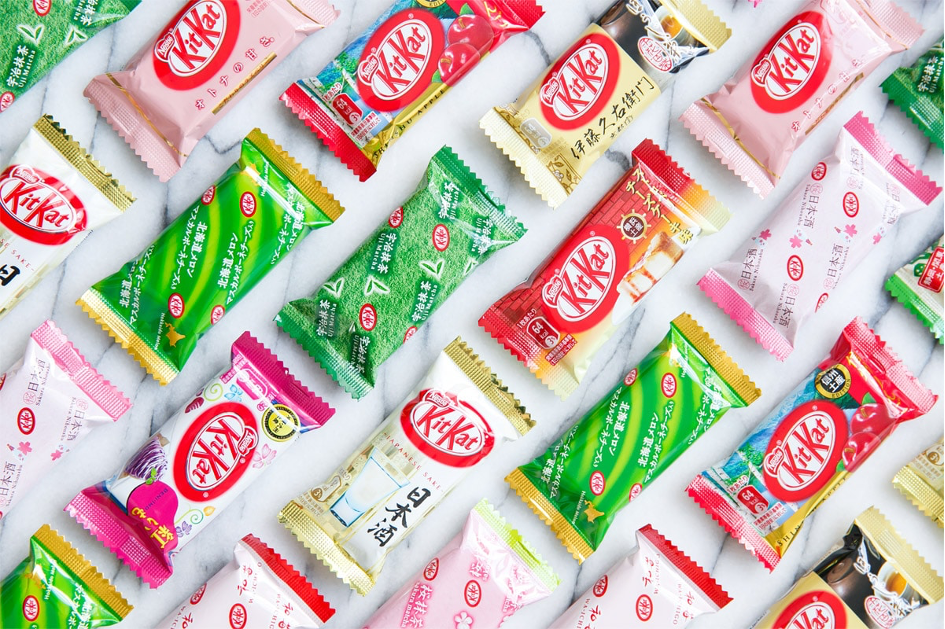
This is the first extension method that comes to mind—the one where you’ll spend the least effort convincing consumers about your new product and, done right, the one that succeeds fastest. It doesn’t just win share; it keeps the brand current and leaves competitors no room on the shelf. In this model, extension is achieved through changes to the content of the product or service, to the degree that brand strategy and target market allow. Chocolate brands widen their range—and with it their brand—through changes in product content. KitKat has 43 varieties in Japan alone, and more than 300 have been launched there since 2000.[2] Elsewhere, the number barely fills one hand. The reason for that gap is that the brand core built on KitKat’s brand purpose in Japan (good luck) doesn’t exist in those other markets.
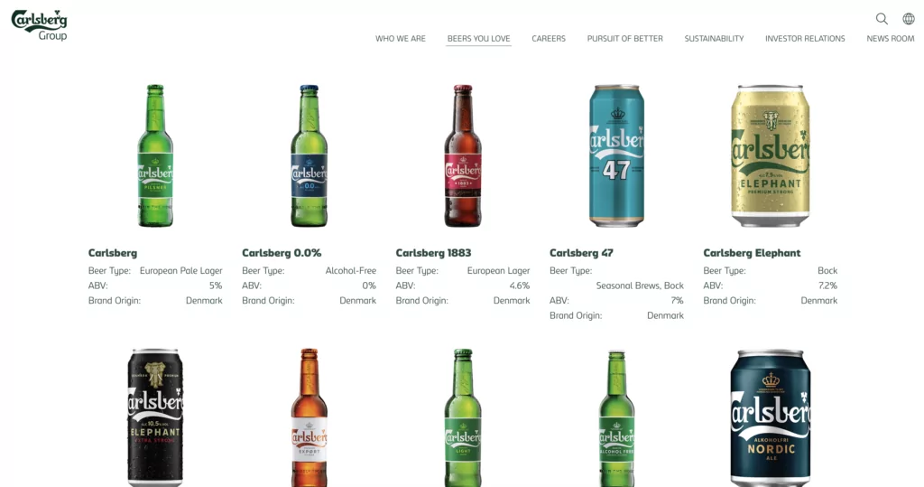
What’s critical in growing a brand through product content is the stance the brand takes when meeting different consumer expectations—and the brand-family model. Beer brands, for example, can diversify their beers. But when Tuborg makes and launches a gluten-free beer, it has to think harder about it. Because shifting consumer expectations—depending on the brand strategy, the brand core, and all of the brand’s intangible assets—may require a shift in the brand model, too. In fact, a brand’s intangible assets may not permit certain extensions, even ones that look as simple as a basic product extension. After all, Tuborg is not just a beer brand; it is a brand that has claimed “MALT” as a method and turned it into its brand core. While Tuborg offers gluten-free beer under its master brand, another brand whose strategy centers on pleasure might ignore this extension, or be forced to extend with a sub-brand.[3]
And was Oreo’s feat of spawning forty-eight products from a single one really down to product-content changes alone? Why couldn’t other biscuit brands do the same? It’s proof of just how important brand strategy and brand strength are.
2. Change the product’s form:
Extension can also be achieved by changing the product’s form or the way it is presented. There are five main elements you can alter to change your product’s form enough to enter a new category. The first is the delivery method. The second is the storage method. The third is the choices you make in in-store placement. Changes to the retail point of sale can also guide how you reshape the product’s form. The one that first comes to mind is changes to product content. A change to one or several of these five elements can carry your brand into a new category.
Snickers put its chocolate-bar product into the freezer cabinet and delivered a successful extension. We later see similar examples in brands like Toblerone. Meanwhile, Starbucks offers ready-to-drink cold coffees not only in its coffee shops but at gas stations, supermarkets, and many other places. It doesn’t stop there: it created an alternative to itself with ready-to-mix instant coffees. By selling these instant coffees in supermarkets, Starbucks changed its product’s delivery method, its point of sale, and its form—all at once—and extended the brand.

3. Transfer the key ingredient to another product area:
Transferring the key ingredient that reveals a brand’s strength—and secures trust in the final product—to another product is another effective extension method. Here, because the strong element in the ingredient will also guarantee the quality of the other product, the extension succeeds.
Honda, for instance, is an expert in engines. That is why it can offer products across cars, motorcycles, and lawnmowers—anything with an engine. The same is true for Husqvarna. These brands succeeded by taking the most fundamental element that affects product performance—the engine—and fitting it into another product.

It doesn’t have to be a technology product. A brand famous for butter can make cheese, or launch butter cookies. A food brand known for tuna—think of a name like John West—might extend, through a sub-brand, into sandwiches, and under its own name into ready-to-eat fish meals. In this model, when the product’s form changes, things may not go as expected. Magnum is an ice-cream brand in which chocolate plays the lead. Its extension into tablet chocolate looked logical, yet it did not succeed. There can be many reasons for that, tied to the target market and the brand.
4. Offer complementary products:
Beyond being a coffee shop, Starbucks is a very good seller of tumblers. Nothing is more natural than coffee and a travel mug completing each other. Here, Starbucks presses the advantage of owning a point of sale and also chooses the path of extending through complementary products.
Signal, meanwhile—though the production processes are very different—stocks toothpaste, floss, and toothbrushes alike. Everything related to teeth falls within the brand’s scope. But Oral-B’s approach to extension is built on expertise (dental know-how), whereas Signal’s is built on brand purpose (the smile). That is why we trust Oral-B’s performance products more, while we feel greater empathy for Signal’s intent.
If a brand’s expertise concerns a product or service, extending into areas that complement it is both possible and likely. One of the best examples here is Google’s extension story. What began with a search engine extended into navigation, an advertising medium, and file storage. Together, these form a world that completes all the needs of the same user. Barilla launching pasta sauce, or Signal producing a toothbrush, are the first examples that come to mind for such extensions. In the same way, nothing seems more natural than a razor brand offering shaving foam.
5. Extend a characteristic you own to different products:
Brands that place their own way of working and their own corporate culture squarely at the center—clearly, as they present the products they make and the services they give—can use that expertise as a vehicle for extension.
What sets this apart from the earlier methods is that the brand isn’t associated directly with a single product (it isn’t like Honda’s engine expertise) or, more importantly, that the system, culture, method, and values behind the product—rather than the product itself—take center stage.
Dyson created a world of its own in product design and technology. Whether the product is a vacuum or a pair of headphones, this brand core is persuasive. Wherever technology and design are involved, Dyson adds unique value with its own way of working and its culture. This brand core frees Dyson from any obligation to be a “home-appliance brand.”

In that sense, even though the product groups Dyson and Apple come to life in are very different, their brand cores resemble each other. If Apple were ever to make a car, there would be strong consensus about how it would look the moment people closed their eyes and imagined it: minimal, white, aluminum, functional.
Brands that draw their “how” from technology and design are in a more advantageous position than others when it comes to extending those elements. Even so, those elements need to matter in the area the extension moves into. Zara, for example, extended into home goods with its Zara Home sub-brand. But does Zara’s “speed” in clothing also give it an edge in home goods? Or, in home textiles, is design not quite so “fast fashion”?
6. Extend the benefit you offer:
A brand’s brand core may focus on the benefit the product offers people, rather than the product itself. In that case, the brand can extend within the frame of that particular benefit.
Arm & Hammer, for example, has a very clear, concrete value proposition: it eliminates tough odors. The brand offers products to deliver that promise in many areas unrelated to one another beyond the fight against bad smells. Some are used inside the fridge; some are sprayed as room fresheners. It even makes sprays and deodorants to prevent bad breath.

Could Red Bull carry its “gives you wings” promise from people to cars, as a gas-station brand? Could Magnum carry its “pleasure” promise into different, highly indulgent areas?
7. Extend the life purpose you own:
When you put a life purpose at your brand core, your brand becomes independent of the product and of how you make it. Nonprofits are born with a purpose by their very nature, which is why WWF could turn into a fashion brand. The clothes carry that special purpose, and people carry that purpose on themselves.
When BOSCH says “Technology for life” and feeds it with Robert Bosch’s legacy, it can offer products fit for that purpose in different areas. It brings together, under one roof, many technologies that enable safe driving for cars, products like spark plugs, power tools, and home appliances.
If Omo says “dirt is good,” it should focus on the beauty of getting dirty in every area of life, and convince us—across different product areas—that we live life better, more beautifully, and more fully by getting dirty. If a hair-care brand like Dove promises to create strong women starting from the hair, it should show up for us in entirely different product groups in the name of women’s empowerment. Of course, these are dreams that look lovely on paper—yet they are thought-provoking examples of how purpose-owning brands can extend.
8. Develop products that embrace a lifestyle and a personality you own:
Complementary products show up differently in brands whose identities are distinctive. There is no equation as simple as toothpaste and a toothbrush here. Brands that reflect the values they hold through a distinctive identity system—and let the buyer reflect them, too—can extend into areas that complement the product line or carry an entirely different characteristic. Virgin Airlines, for instance, pulled this off with its unique and powerful brand personality. The common denominator across all of Virgin’s products is that they depict a lifestyle that stands against the status quo. This worked for some products but sometimes didn’t; Virgin Cola, for example, was a complete flop. Even so, brands with an original, powerful identity can build brands in different areas on the personal values and personality traits they own. Harley-Davidson can sell both motorcycles and boots, and even open a bar. Going further still, it could even found a political party. Harley-Davidson is a brand that makes you become like it and pulls you into its own orbit—a whole identity and community.

Armani, meanwhile, offers fashion and chocolate under one roof—its Armani/Dolci line alongside its clothing—catering to the needs of the top segment. This extension, too, is grounded in a lifestyle and prioritizes socioeconomic status.
Conclusion
In the end, brand extension may be one of the most complex and technical subjects in the world of brands. It should come to life through intensive research and brand-consultancy work. Each of the dozens of examples I have examined here has been read and interpreted in hindsight—but brand extension can only be done according to a forecast of the future. Neither successful extensions nor failed ones serve as one-to-one templates for the next case. Dozens of factors—the conditions of the era, market structure, brand core, brand strength, consumer expectations, competition—shape the success of a brand extension. When every part of the process is carried out effectively and correctly, the brand will successfully chart its own unique path to extension.
[1] Brand Core: a definition produced by Goodjob. It is a renewed version of positioning theory. Where positioning confines a brand to a specific product group or consumer segment, the Brand Core refers to one of the four cores a brand will base its strategy and communication on.
[2] https://www.nytimes.com/interactive/2018/10/24/magazine/candy-kit-kat-japan.html
[3] Why extending with a sub-brand or an affiliated new brand is framed as a “necessity” is a separate discussion; but in general, extending a brand using only its own intangible and tangible assets is the ideal one hopes to reach.